UAE's AI Ban for Kids: Safeguarding Futures, Igniting Debate
Analysis of UAE's AI ban for under-13s. Explore rationale, benefits for child development & data privacy, challenges, and building digital literacy.
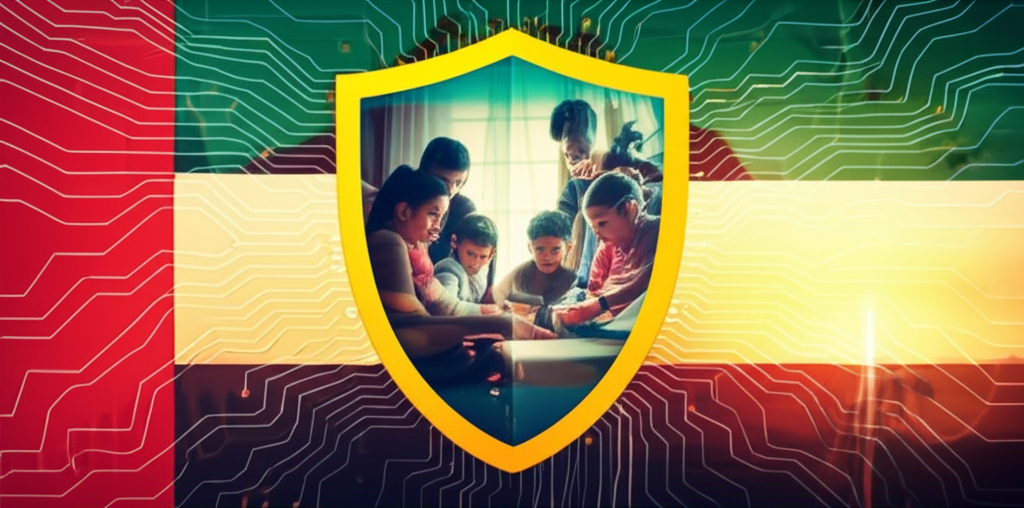
The rapid integration of Artificial Intelligence into our daily lives is undeniable. As the UAE continues its ambitious journey to become a global AI hub, a significant policy shift has recently captured my attention: the prohibition of AI tool usage for students under the age of 13 in educational settings. This is not merely a headline-grabbing announcement; it represents a considered, strategic approach to safeguarding our youngest learners as they navigate the increasingly complex digital landscape. From my vantage point as Chief AI Strategist and a serial entrepreneur deeply involved in scaling AI, this policy prompts a crucial discussion about balance - the delicate act of harnessing AI's potential while rigorously protecting the foundational development of children.
At its core, this age-specific digital safeguard is rooted in a profound understanding of child development and the unique vulnerabilities of younger minds. While AI tools, like those from OpenAI or Google, offer incredible capabilities, their unfettered use by very young children could inadvertently bypass critical developmental stages. The UAE's policy, therefore, is a proactive measure to ensure that foundational learning and cognitive skills are built on solid, human-led ground before introducing advanced AI augmentation.

The Rationale Behind Age-Specific Digital Safeguards
Protecting Foundational Learning and Cognitive Development
For children under 13, the formative years are paramount for developing core cognitive abilities such as critical thinking, problem-solving, creativity, and social-emotional intelligence. These skills are best honed through direct human interaction, hands-on exploration, and the natural process of trial and error. Over-reliance on AI tools that can instantly provide answers or generate content might, for this age group, circumvent the very cognitive exercises that build these essential building blocks.
Think of it like learning to walk before running. Children need to develop their motor skills through crawling and toddling before they are ready to sprint. Similarly, foundational learning in arithmetic, language, and critical reasoning should be mastered through traditional, interactive pedagogical methods before AI tools become a crutch or an overwhelming substitute for genuine understanding. This policy ensures that educators can focus on nurturing these fundamental skills without the immediate distraction or potential dependency introduced by advanced AI.
Data Privacy and Child Protection
The digital world, while offering immense opportunities, also presents significant risks, particularly concerning data privacy. Younger children may not possess the understanding or maturity to discern the implications of sharing personal information online or engaging with AI systems that collect vast amounts of data. The UAE's policy serves as a robust shield, preventing younger students from interacting with AI platforms where their data might be collected, analyzed, or potentially misused.
Reputable AI platforms often have sophisticated data policies, but the nuances can be lost on children. For instance, many AI models, including those from Microsoft or Apple, learn and improve by processing user inputs. For young children, this could mean their early learning attempts, queries, and even inadvertent personal details are captured. This policy prioritizes their privacy, ensuring their digital footprint is managed responsibly and ethically during these crucial developmental years.
Navigating the Challenges: Enforcement and the Skills Gap
Enforcement: A Complex Balancing Act
Implementing and enforcing such a policy across thousands of educational institutions presents a formidable challenge. Distinguishing between a child using an AI tool for direct assistance versus one using it for creative exploration or learning can be incredibly difficult. Educators will require clear guidelines, robust training, and sophisticated monitoring tools to ensure compliance effectively.
Furthermore, the ubiquitous nature of AI-powered features embedded within common applications (e.g., smart writing assistants, predictive text) means a complete ban is almost impossible. The focus must be on prohibiting the *explicit* use of advanced AI generation or analysis tools for tasks that require fundamental human cognitive effort. This requires a nuanced understanding from educators and a commitment to open dialogue with students and parents about responsible technology use.
The Specter of a Digital Skills Gap
A primary concern often raised against such protective measures is the potential to create a digital skills gap. If students are not exposed to AI tools at an earlier age, will they be at a disadvantage compared to peers in regions with more permissive policies? This is a valid question, one that demands a forward-thinking strategy to mitigate.
The key lies in how this policy is framed. It's not an outright rejection of AI, but a strategic delay, ensuring a strong foundation is built first. The aim is to foster digital literacy and critical thinking *about* AI, rather than simply proficiency *with* AI tools at a young age. As children progress, their introduction to AI should be guided and age-appropriate, building upon their established learning foundations. This approach prepares them to use AI as a powerful tool for enhancement, not a replacement for thinking.
My own journey has consistently shown me the power of structured learning. Over my 17+ years driving AI innovation for over 40 government entities, including crucial projects with the Prime Minister's Office and DEWA here in Dubai, I've seen how foundational understanding is key. Early in my career, when introducing complex AI models for resource optimization, we encountered initial resistance. Stakeholders were overwhelmed. My team and I learned that success wasn't just in the technology itself, but in building understanding step-by-step, ensuring everyone grasped the core principles before diving into advanced applications. This experience reinforces my belief that a phased approach to AI education, starting with strong fundamentals for younger children, is the most sustainable path to true mastery.
Contrasting Global Trends and the UAE's Unique Position
Globally, the educational landscape is increasingly embracing AI. From personalized learning platforms developed by companies like Pearson to AI-powered research assistants accessible via platforms like Perplexity AI, many educational systems are integrating AI to enhance teaching and learning. Institutions are exploring how AI can personalize curricula, automate administrative tasks, and provide students with intelligent tutoring.
However, the UAE's policy highlights a different philosophy - one that prioritizes the developmental stage of the child above immediate access to all technological tools. This is not about being anti-AI, but about being pro-child development and pro-foundational learning. It's a nuanced approach that acknowledges that the *how* and *when* of AI integration are as critical as the *what*. By imposing this age restriction, the UAE is setting a precedent for a more thoughtful, human-centric integration of AI in education, emphasizing critical thinking and creativity over mere tool utilization.
AI Integration Strategies: A Comparative Glance
| Approach | Age Focus | Primary Goal | Potential Concern |
|---|---|---|---|
| UAE Policy (Under 13 Ban) | Under 13 | Foundational Development, Data Privacy | Digital Skills Gap Risk |
| Global Trend (Early Adoption) | All Ages (with guidance) | AI Literacy, Enhanced Learning | Over-reliance, Privacy Risks |
Fostering Responsible Digital Literacy for Young Minds
As parents and educators, our role is to prepare children for a future where AI interaction is not an option, but a certainty. This policy, rather than being a barrier, offers an opportunity to build a stronger foundation for that interaction. Here's how we can foster responsible digital literacy:
- Emphasize Core Cognitive Skills: Prioritize activities that encourage critical thinking, problem-solving, creativity, and collaboration. These are the skills that will help children discern when and how to use AI effectively.
- Teach Digital Citizenship Early: Introduce concepts of online safety, data privacy, and responsible technology use from a young age, adapting the complexity to their understanding.
- Promote 'AI Literacy' Not Just 'AI Use': Instead of focusing solely on how to operate AI tools, teach children *about* AI. What is it? How does it work? What are its limitations and ethical considerations? Resources from organizations like Common Sense Media can be invaluable.
- Encourage Human-Centric Creation: Foster a love for creating things through traditional means - writing stories, drawing pictures, building projects - before AI tools become the default creative partner.
- Open Dialogue: Maintain an ongoing conversation about technology's role in their lives. Understand their digital experiences and guide them with empathy and clear expectations.
"The UAE's policy isn't about blocking AI; it's about building a more robust human foundation upon which AI can later be constructively integrated, ensuring our children become masters of technology, not merely its users."
Conclusion: A Balanced Path Forward
The UAE's decision to prohibit AI tool usage for students under 13 in educational settings is a thoughtful, child-centric policy that deserves careful consideration. It underscores a commitment to prioritizing foundational cognitive and emotional development, alongside data privacy, during a critical stage of childhood. While challenges in enforcement and the potential for a skills gap exist, these are surmountable with a clear strategy focused on guided, age-appropriate integration later on.
By fostering strong core skills and digital literacy *before* introducing advanced AI tools, we empower our children to approach technology with critical thinking, creativity, and a deep understanding of its implications. This balanced approach ensures that as they grow, they will be well-equipped to leverage AI responsibly and ethically, becoming innovators and leaders in a future where human intelligence and artificial intelligence work in powerful synergy. I encourage educators, parents, and policymakers worldwide to consider this model as we navigate the evolving landscape of AI in education.