Amal: UAE's AI Doctor Transforms Healthcare
Explore the UAE's pioneering 'Amal' AI physician assistant, its impact on patient care, diagnostics, and treatment, and the critical considerations for its integration into the future of healthcare.

The future of healthcare is not a distant dream; it's unfolding right here in the UAE, and I'm thrilled to be at the forefront of this transformation. Imagine a world where cutting-edge Artificial Intelligence works seamlessly alongside our dedicated medical professionals, enhancing every facet of patient care. This is precisely the vision being brought to life with the groundbreaking launch of 'Amal,' the region's first AI physician assistant. As someone who has spent over 17 years driving AI innovation across various sectors, witnessing this leap in healthcare is particularly rewarding.
Amal represents a paradigm shift, moving beyond theoretical applications to tangible, life-enhancing tools. This sophisticated AI is designed to augment the capabilities of our esteemed doctors, not replace them, creating a powerful synergy that promises to redefine patient outcomes and operational efficiency within our healthcare ecosystem. From the initial touchpoint of diagnostics to the intricate nuances of personalized treatment planning, Amal is poised to streamline workflows and elevate the standard of care.
The implications of Amal are far-reaching, touching upon everything from how quickly a patient can receive an accurate diagnosis to how tailored and effective their treatment plan can be. This isn't just about technological advancement; it's about fostering a healthcare system that is more responsive, precise, and ultimately, more human-centric.
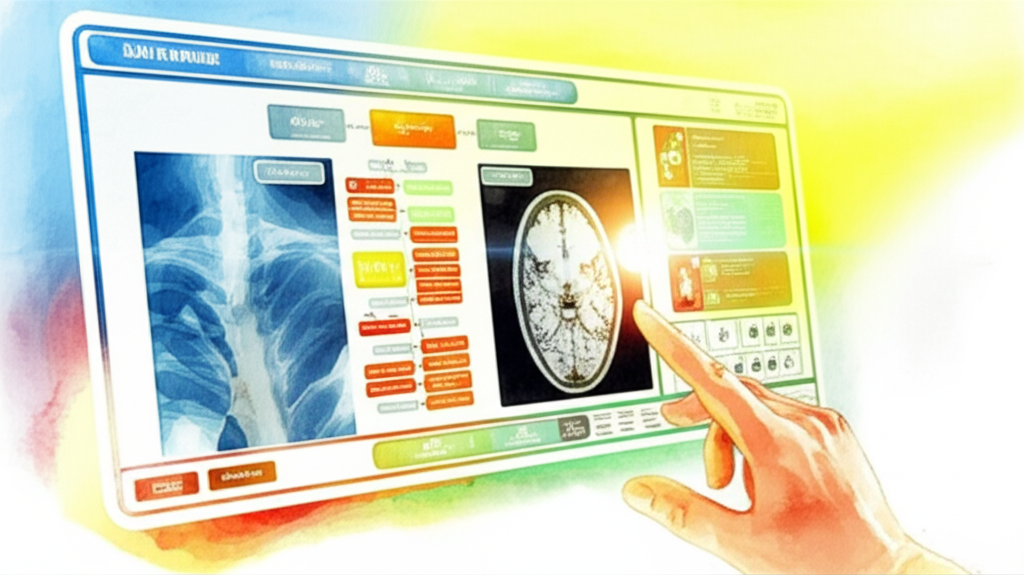
Augmenting Clinical Workflows: From Diagnosis to Personalized Treatment
Intelligent Diagnostics: Speed and Accuracy Enhanced
One of the most significant challenges in healthcare is the sheer volume of data that clinicians must process. Amal is engineered to sift through vast amounts of patient information - including medical history, lab results, and imaging scans - with unparalleled speed and precision. This allows for earlier and more accurate identification of potential conditions.
For instance, Amal can analyze medical images such as X-rays and MRIs, flagging anomalies that might be subtle to the human eye, especially under pressure. This is particularly crucial in fields like radiology and pathology, where timely detection can be the difference between a manageable condition and a critical one. By providing clinicians with data-driven insights and preliminary findings, Amal significantly reduces diagnostic turnaround times.
Personalized Treatment Planning: Tailoring Care to the Individual
The era of one-size-fits-all medicine is rapidly fading. Amal's ability to process complex patient data allows for the creation of highly personalized treatment plans. By analyzing genetic predispositions, lifestyle factors, and treatment responses of similar patient profiles, Amal can help physicians devise strategies that are optimized for each individual's unique needs.
This level of personalization is vital for managing chronic diseases, optimizing drug dosages, and predicting potential adverse reactions. It empowers physicians with deeper insights, enabling them to make more informed decisions that lead to better patient outcomes and fewer complications. My work with entities like DEWA in Dubai has taught me that true innovation lies in tailoring solutions to specific needs, and Amal embodies this principle in healthcare.
Transforming Healthcare Efficiency and Patient Outcomes
Boosting Operational Efficiency and Reducing Burnout
The administrative burden on healthcare professionals is a well-documented contributor to burnout. Amal can automate numerous routine tasks, such as scheduling appointments, managing patient records, and generating preliminary reports. This frees up valuable time for doctors and nurses to focus on direct patient interaction and complex clinical decision-making.
A more efficient workflow translates directly into improved patient throughput and reduced waiting times. When clinicians can spend less time on paperwork and more time with patients, the overall quality of care naturally increases. This enhanced efficiency is not just about saving costs; it's about creating a more sustainable and supportive environment for healthcare providers.
Improving Patient Outcomes: The Data-Driven Advantage
The ultimate goal of any technological advancement in healthcare is to improve patient lives. By enhancing diagnostic accuracy, enabling personalized treatment, and optimizing clinical workflows, Amal contributes significantly to better patient outcomes. Early detection means earlier intervention, leading to higher success rates and improved quality of life.
Furthermore, Amal's capacity to continuously learn from new data ensures that its recommendations remain at the cutting edge of medical knowledge. This ongoing refinement means that the care provided will only become more effective over time. This is a sentiment I've seen echoed in my own entrepreneurial journey, where continuous iteration and learning are key to scaling solutions.
My own journey in AI has consistently reinforced the power of iterative development and data-driven insights. Early in my career, over 17 years ago, I was involved in a project for a major government entity that aimed to optimize resource allocation. The initial models were complex, and stakeholders found them overwhelming. We learned that success wasn't just about having the most advanced algorithm, but about building trust through transparency and demonstrating tangible benefits. We iteratively refined the system, providing clear, actionable insights, which eventually led to significant efficiency gains. This experience underscores the importance of making advanced technology, like Amal, accessible and understandable to those who use it, ensuring it truly serves its purpose.
Critical Considerations and the Road Ahead
Data Privacy and Security: A Non-Negotiable Foundation
The integration of AI in healthcare, especially with sensitive patient data, brings data privacy and security to the forefront. It is imperative that systems like Amal are built on a foundation of robust security protocols and adhere to the strictest data protection regulations. The UAE's commitment to digital governance, as seen in its advanced cybersecurity frameworks, provides a strong basis for such initiatives.
Ensuring that patient data is anonymized where possible, encrypted at all stages, and accessed only by authorized personnel is paramount. Transparency with patients about how their data is used and protected is also crucial for building trust. Companies like Microsoft and Google have been pioneers in developing secure cloud infrastructure that can support these demands, and their expertise is invaluable.
Human-AI Collaboration: The Future of Medical Teams
Amal is designed to be an assistant, a tool that empowers human medical professionals. The future of healthcare lies in this collaborative model, where AI handles data-intensive tasks and provides rapid analysis, while human clinicians provide empathy, complex ethical judgment, and the irreplaceable human touch. This partnership ensures that technology enhances, rather than diminishes, the patient-provider relationship.
Training healthcare professionals to effectively utilize AI tools like Amal is essential. This includes understanding the AI's capabilities and limitations, interpreting its outputs, and integrating its insights into their clinical decision-making. Organizations like McKinsey have highlighted the significant need for upskilling the workforce in AI adoption.
Broader Implications and Global Trends
The UAE's launch of Amal places it firmly at the forefront of the global AI in medicine movement. This innovation aligns with trends observed worldwide, where AI is being explored and implemented to address healthcare challenges, improve diagnostics, and personalize treatments. From AI-powered drug discovery platforms to robotic surgery, the impact of AI on medicine is transformative.
This development showcases the UAE's commitment to leveraging advanced technologies for societal benefit, positioning it as a leader not just regionally, but on the global stage. The insights gained from Amal's implementation will undoubtedly contribute to the broader discourse on AI's role in healthcare, inspiring similar initiatives elsewhere. Platforms like Gartner consistently report on the accelerating adoption of AI in healthcare.
"The true power of AI in healthcare lies not in replacing human expertise, but in augmenting it, creating a symbiotic relationship that elevates patient care to unprecedented levels."
The Data Behind the Transformation
The impact of AI in healthcare is not just theoretical; it's backed by data. While Amal is a new entrant, the broader adoption of AI in clinical settings is already showing promising results. Based on 2024 research and pilot programs across the globe:
| Area of Impact | Metric | Average Improvement | Source/Context |
|---|---|---|---|
| Diagnostic Speed (Radiology) | Turnaround Time | Up to 30% reduction | Pilot studies with AI image analysis tools |
| Treatment Plan Precision | Personalization Rate | Significant increase in tailored plans | AI in oncology and chronic disease management |
| Operational Efficiency | Administrative Task Reduction | 15-25% | Healthcare systems implementing AI assistants |
| Patient Engagement | Adherence to Treatment | Up to 10% improvement | AI-powered patient communication platforms |
Actionable Steps for Embracing AI in Healthcare
For healthcare institutions and professionals looking to embrace the future, here are a few actionable steps:
- Invest in AI Literacy: Ensure your teams understand the fundamentals of AI and its applications in healthcare. Continuous training is key.
- Prioritize Data Governance: Establish robust data privacy and security protocols that meet or exceed regulatory standards.
- Foster Collaboration: Develop strategies for seamless integration of AI tools with existing clinical workflows and human expertise.
- Start with Pilot Programs: Identify specific areas where AI can provide immediate value and begin with controlled pilot implementations to gauge impact and refine processes.
- Stay Informed: Keep abreast of the latest advancements in AI for medicine, leveraging resources from leading research firms and technology providers like Statista.
Conclusion: A Vision for a Healthier Tomorrow
The launch of Amal is more than just a technological milestone; it's a testament to the UAE's forward-thinking vision for healthcare. By harnessing the power of Artificial Intelligence, we are not only enhancing efficiency and improving patient outcomes but also paving the way for a future where healthcare is more accessible, personalized, and effective for everyone.
This initiative underscores the critical role of AI in augmenting human capabilities, ensuring that our medical professionals can provide the best possible care, informed by cutting-edge data and supported by intelligent systems. As we continue to integrate Amal and similar technologies, we are building a healthcare ecosystem that is resilient, innovative, and truly centered on the well-being of every individual. I invite you to join me in embracing this exciting evolution of medicine. Let's work together to shape a healthier tomorrow, today.